
Desk exercises: form, timing, and everyday benefit
These moves are designed for carpeted offices, cubicles, and home desks. Move slowly, keep breathing steady, and skip anything that feels sharp or unstable.
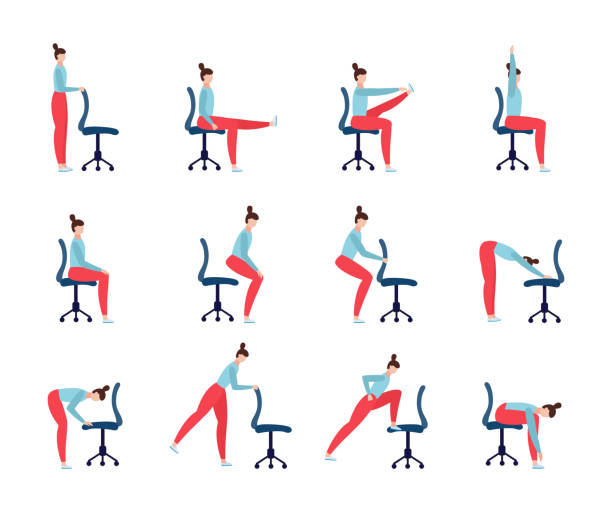
Seated mobility series
Chair hip shift: Sit tall, feet hip-width apart. Without twisting your spine aggressively, shift weight to your right sit bone, then left. Ten slow shifts wake up glutes that go quiet during long calls.
Thoracic opener: Lace fingers behind your head lightly. Inhale and guide elbows toward the wall behind you while lifting the chest. Exhale and relax. This targets the upper back, which often rounds forward toward monitors.
Ankle circles: Lift one foot slightly off the floor and draw slow circles. Switch sides. Useful on flights, in labs, or anywhere leg room is tight.
Purpose: seated work keeps you productive while introducing joint motion. You are not trying to sweat—just adding variety to your day. How you feel afterward can differ from person to person.
Standing moves beside your desk
- Desk-supported hinge: Hands on desk, soft knees. Hinge hips back until you feel a mild stretch along the back of the legs. Hold twenty seconds. Some people use this after long drives or commutes to change posture.
- Wall angels (hallway version): Back flat to a wall if available; otherwise stand tall. Glide arms from “W” to “Y” without arching the lower back. Eight reps train shoulder blade control for keyboard posture.
- March in place: Twenty quiet steps raise heart rate slightly and break prolonged stillness before afternoon meetings.
Stand on a stable surface, not rolling mats. If you wear dress shoes, widen your stance for balance. These moves are for general movement during the workday; they are not a substitute for ergonomic setup, medical care, or outdoor walking when your schedule allows.
Hands, wrists, and forearms for keyboard work
Typing and mouse use load small muscles repeatedly. Every ninety minutes, try this flow: shake hands loosely for five seconds, extend one arm with palm up and gently draw fingers back with the opposite hand (fifteen seconds), then palm down and repeat. Finish with slow fist open-close ten times.
Some occupational studies describe lower self-reported forearm fatigue when workers take brief pauses across the day rather than one long stretch session. Results vary—use pauses for comfort and ergonomics, not as a treatment for symptoms.
If numbness or tingling appears regularly, adjust your workstation and consult appropriate professionals; DeskFlow content stays general on purpose.
FAQs — Desk Exercises
How many reps should I do?
Most mobility moves work well for six to twelve controlled reps or twenty to thirty seconds per hold. Quality beats quantity.
Can I do these during video calls?
Camera-off stretches below the desk line are discreet. Standing moves work best between calls.
What if my chair has armrests?
Slide forward slightly so armrests do not block shoulder movement, or perform standing versions instead.
Stack a five-minute desk routine
Minute one: diaphragmatic breathing, hand on belly. Minute two: seated hip shifts and thoracic openers. Minute three: standing hinge and calf raises. Minute four: wrist flow. Minute five: slow neck turns looking over each shoulder without forcing range.
Save this sequence as a calendar block labeled “reset.” Teams that share the same five-minute template report less friction—everyone knows what “reset” means. For group coaching on these stacks, visit Group Sessions or contact us.
Schedule micro-breaks